

What is the weight of a forklift AGV in a warehouse?
Hey there! As a supplier of Forklift AGV in Warehouse, I often get asked about the weight of these nifty machines. So, let's dive right into it and figure out what the deal is with the weight of a forklift AGV in a warehouse.
First off, why does the weight of a forklift AGV matter? Well, it has a bunch of implications. For starters, the weight affects the stability of the AGV. A heavier AGV is generally more stable, which is super important when it's carrying heavy loads around the warehouse. You don't want it tipping over and causing a big mess, right? Also, the weight can impact the energy consumption. Heavier AGVs usually need more power to move around, which means higher operating costs. And let's not forget about the floor of the warehouse. If the AGV is too heavy, it could damage the floor over time.
So, what factors influence the weight of a forklift AGV? There are quite a few. The size of the AGV is a big one. Larger AGVs tend to be heavier because they have more material in their construction. They also usually have bigger batteries to power them, which adds to the weight. The type of load it's designed to carry is another factor. If it's built to handle really heavy pallets, it needs to be strong and sturdy, which often means more weight. The design and construction materials also play a role. AGVs made with high - strength steel or other heavy - duty materials will weigh more than those made with lighter composites.
Now, let's talk about the different types of forklift AGVs and their typical weights.
Forklift AGV for Pallets
The Forklift AGV for Pallets is a common type in warehouses. These AGVs are designed to pick up and move pallets around. On average, a small - to - medium - sized Forklift AGV for Pallets can weigh anywhere from 1,500 to 3,000 kilograms. This weight range allows them to be relatively maneuverable while still being able to handle standard - sized pallets. Smaller models might be on the lighter end of the spectrum, around 1,500 kg, and are great for warehouses with limited space and lighter loads. Medium - sized ones, weighing closer to 3,000 kg, can handle heavier pallets and are more suitable for larger warehouses with higher - volume operations.

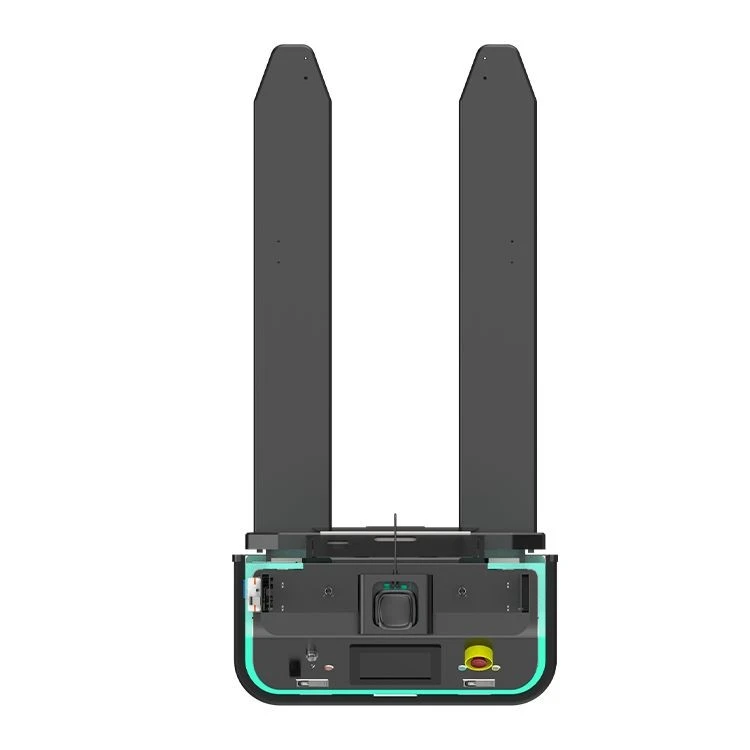
Handling Forklift AGV
The Handling Forklift AGV is a bit more versatile. It can be used for a variety of tasks, not just pallet handling. These AGVs often have additional features like adjustable forks, advanced sensors, and more sophisticated control systems. Because of these extra components, they tend to be a bit heavier. A typical Handling Forklift AGV can weigh between 2,500 and 4,000 kilograms. The heavier weight gives them the stability needed for more complex handling operations. For example, if it needs to lift and move irregularly shaped objects, the extra weight helps keep it balanced.
Auto Forklift AGV
The Auto Forklift AGV is fully automated and can operate without much human intervention. These AGVs are usually equipped with the latest technology, including high - precision navigation systems and powerful motors. As a result, they can be quite heavy. An Auto Forklift AGV can weigh from 3,000 to 5,000 kilograms or even more in some cases. The higher weight is due to the advanced technology components and the need for a strong frame to support the automated operations.
When you're considering the weight of a forklift AGV for your warehouse, you also need to think about the floor capacity of your warehouse. Most industrial warehouse floors are designed to handle a certain amount of weight per square meter. You need to make sure that the combined weight of the AGV and its load doesn't exceed this capacity. Otherwise, you could end up with a damaged floor, which is not only expensive to repair but can also disrupt your warehouse operations.
Another thing to keep in mind is the energy efficiency. As I mentioned earlier, heavier AGVs generally consume more energy. But don't let that scare you too much. Many modern forklift AGVs are designed with energy - saving features. For example, they might have regenerative braking systems that can capture and reuse energy when the AGV slows down or stops. Some also have intelligent power management systems that adjust the power consumption based on the task at hand.
So, how do you choose the right - weight forklift AGV for your warehouse? It all comes down to your specific needs. If you have a small warehouse with light loads and limited space, a lighter AGV might be the way to go. It will be more maneuverable and cost - effective to operate. On the other hand, if you have a large warehouse with heavy - duty operations, a heavier AGV with more capabilities will be a better fit.
In conclusion, the weight of a forklift AGV in a warehouse can vary widely depending on the type, size, and features of the AGV. Whether you're looking at a Forklift AGV for Pallets, a Handling Forklift AGV, or an Auto Forklift AGV, it's important to consider the weight in relation to your warehouse's floor capacity, energy requirements, and the specific tasks you need the AGV to perform.
If you're interested in learning more about the forklift AGVs we offer or want to discuss which one is the best fit for your warehouse, don't hesitate to reach out. We're here to help you make the right decision for your business.
References
- "Automated Guided Vehicle Systems" by Material Handling Institute
- Industry reports on forklift AGV technology and applications