

How does a Powered Roller AGV manage its charging process?
How does a Powered Roller AGV manage its charging process?
Hey there! I'm an expert working with a Powered Roller AGV supplier, and I'm super stoked to dive into how these awesome machines handle their charging process.
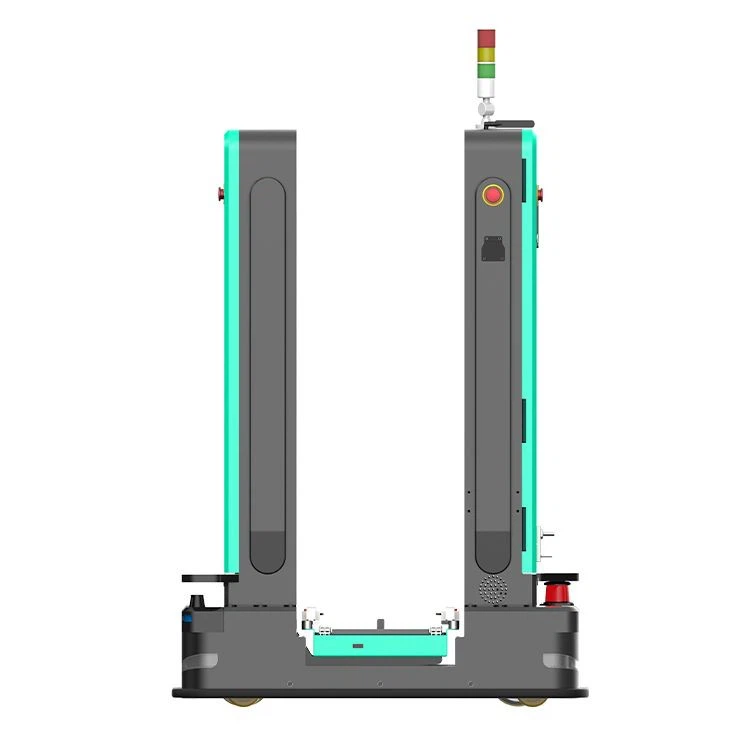
First off, let me quickly introduce what a Powered Roller AGV is. If you're curious, you can click on this Powered Roller AGV link to learn more. They're a type of Automated Guided Vehicle that come with powered rollers. These rollers help in efficiently moving materials around in warehouses, factories, and all sorts of industrial settings.
Now, onto the charging part. One of the most common methods is the opportunity charging system. Picture this: the AGV is going about its daily job, shuttling goods here and there. Whenever it has a small downtime, like when it's waiting for the next task or a bit of a break in the workflow, it heads over to the charging station.
The charging stations are strategically placed along the AGV's routes. They're usually set up in areas where the AGV can easily access them without causing any disruptions to other operations. When the AGV gets close to the charging station, it uses a set of sensors. These sensors work like a homing beacon, guiding the AGV into the perfect position for charging. There are usually magnetic or optical sensors that communicate with corresponding markers at the charging station.
Once it's in place, the physical connection is made. There are a few ways this can happen. One popular method is through inductive charging. It's a wireless way of charging, kind of like those wireless chargers for your phone. Inside the AGV, there's a receiver coil, and at the charging station, there's a transmitter coil. When the AGV is in the right spot, an alternating magnetic field is created between the two coils. This magnetic field then induces an electric current in the receiver coil, which charges the AGV's battery.
The great thing about inductive charging is that it's super convenient. There are no exposed electrical contacts, so there's less risk of wear and tear, corrosion, or electrical shocks. Plus, it's a clean system as there's no physical debris that can accumulate on the contacts.
Another method is the conductive charging. Here, the AGV has metal contacts on its underside, and the charging station has corresponding contacts on the floor. When the AGV parks over the charging station, the contacts touch each other, and the electricity starts flowing to charge the battery. This method is a bit more straightforward and can be more cost - effective in some cases. But it does require a more precise alignment of the AGV over the charging station compared to inductive charging.
Now, how does the AGV know when it needs to charge? Well, there's a battery management system (BMS) inside the AGV. It constantly monitors the battery's state of charge (SOC). The BMS is like the brain of the AGV's power system. It keeps track of how much energy is left in the battery.
When the battery's SOC drops below a certain level, let's say 30% or so, the BMS sends a signal to the AGV's control system. The control system then decides whether it can stop its current task and head to the charging station right away or if it needs to finish a few more jobs first.

If it's a busy time in the factory and there's a high demand for the AGV to keep working, the system might prioritize completing a few more tasks before going to charge. But if the battery level gets really low, say below 15%, the AGV will drop everything and make a beeline for the charging station to avoid running out of power mid - task.
During the charging process, the BMS also plays a crucial role. It regulates the charging current and voltage. It ensures that the battery is charged at the optimal rate to avoid overcharging or undercharging. Overcharging can damage the battery cells and reduce the battery's lifespan. On the other hand, undercharging means the AGV won't have enough power for its next round of tasks.
Some of our high - end Powered Roller AGVs also have smart charging algorithms. These algorithms take into account factors like the AGV's usage patterns, the time of day, and the overall power demand in the facility. For example, if the factory usually has a lower power demand during the night, the AGV might be programmed to do a full charge during that time to take advantage of the cheaper electricity rates.
Let's also talk about the different types of batteries used in Powered Roller AGVs. Lithium - ion batteries are becoming increasingly popular. They have a high energy density, which means they can store a lot of energy in a relatively small and lightweight package. This is great for AGVs as it allows them to have a longer operating time without adding too much extra weight.
Lead - acid batteries, on the other hand, are more traditional. They're cheaper upfront but have a lower energy density and a shorter lifespan compared to lithium - ion batteries. However, they're still used in some applications where cost is a major factor and the operating requirements aren't too demanding.
Now, I'd also like to mention a couple of related models in our AGV lineup. If you're interested in a more general Roller Conveyor AGV, it offers a different set of features and capabilities for material handling. And for those specific docking requirements, our Roller Docking AGV is a great option.
If you're in the market for a Powered Roller AGV or any of our other AGV models and want to learn more about how they can fit into your operations, or if you have any questions about the charging process or anything else, don't hesitate to get in touch with us. We're here to help you make the best decision for your business.
References
- Industry reports on AGV technology and battery management
- Manufacturer's specifications for Powered Roller AGVs