

How does a forklift AGV synchronize with other AGVs in the warehouse?
In the dynamic landscape of modern warehousing, the integration and synchronization of Forklift Automated Guided Vehicles (AGVs) with other AGVs play a pivotal role in optimizing operations. As a leading Forklift AGV supplier, we understand the complexities and significance of seamless AGV synchronization. This blog delves into the mechanisms, challenges, and best practices for achieving efficient synchronization among Forklift AGVs and their counterparts in the warehouse.
Understanding the Basics of Forklift AGV Synchronization
Forklift AGVs are designed to perform a variety of tasks in the warehouse, such as transporting goods, stacking pallets, and loading/unloading trucks. To operate effectively in a shared environment with other AGVs, they need to synchronize their movements, tasks, and communication. Synchronization ensures that AGVs can work together without collisions, minimize idle time, and maximize throughput.
One of the fundamental aspects of synchronization is the ability of AGVs to navigate the warehouse safely and efficiently. Forklift AGVs use a variety of navigation technologies, including laser guidance, magnetic tape guidance, and vision-based guidance. Laser Guided Forklift AGV is a popular choice due to its high precision and flexibility. These AGVs use lasers to scan the environment and create a map, which they use to navigate and avoid obstacles.
Communication Protocols for AGV Synchronization
Effective communication is the key to AGV synchronization. Forklift AGVs need to communicate with each other, as well as with the warehouse management system (WMS) and other equipment. There are several communication protocols used in AGV systems, including Wi-Fi, Ethernet, and ZigBee.
Wi-Fi is a widely used communication protocol for AGVs because it provides high-speed wireless connectivity. AGVs can use Wi-Fi to communicate with the WMS, receive task assignments, and exchange information with other AGVs. Ethernet is another option for wired communication, which offers higher reliability and bandwidth. ZigBee is a low-power wireless communication protocol that is suitable for short-range communication between AGVs and sensors.
In addition to these standard communication protocols, some Forklift AGV systems use proprietary communication protocols to ensure secure and efficient communication. These protocols are designed to meet the specific requirements of the AGV system and can provide features such as real-time data transfer, encryption, and error correction.
Task Allocation and Scheduling
Task allocation and scheduling are critical components of AGV synchronization. The WMS is responsible for assigning tasks to AGVs based on factors such as the priority of the task, the availability of AGVs, and the location of the goods. The goal is to optimize the use of AGVs and ensure that tasks are completed in a timely manner.
There are several algorithms used for task allocation and scheduling, including the nearest neighbor algorithm, the genetic algorithm, and the ant colony optimization algorithm. These algorithms take into account various factors such as the distance between the AGV and the task, the time required to complete the task, and the availability of resources.
For example, the nearest neighbor algorithm assigns tasks to the AGV that is closest to the task location. This algorithm is simple and easy to implement, but it may not always result in the optimal solution. The genetic algorithm and the ant colony optimization algorithm are more complex algorithms that can find the optimal solution by simulating the behavior of natural systems.
Collision Avoidance and Safety
Collision avoidance is a crucial aspect of AGV synchronization. Forklift AGVs operate in a dynamic environment with other AGVs, humans, and equipment. To prevent collisions, AGVs need to be equipped with sensors and safety systems.
AGVs use a variety of sensors, including laser scanners, ultrasonic sensors, and cameras, to detect obstacles and other AGVs in their path. These sensors provide real-time information about the environment, which the AGV uses to adjust its speed and direction. In addition to sensors, AGVs are also equipped with safety systems such as emergency stop buttons and warning lights.
Collision avoidance algorithms are used to ensure that AGVs can navigate the warehouse safely. These algorithms use the sensor data to predict the movement of other AGVs and obstacles and make decisions to avoid collisions. Some AGV systems use a combination of reactive and proactive collision avoidance strategies. Reactive strategies involve the AGV stopping or changing direction when it detects an obstacle, while proactive strategies involve the AGV planning its path to avoid potential collisions.
Integration with Other Warehouse Systems
Forklift AGVs need to be integrated with other warehouse systems, such as the WMS, conveyor systems, and storage systems. Integration ensures that AGVs can work seamlessly with other equipment and systems in the warehouse.

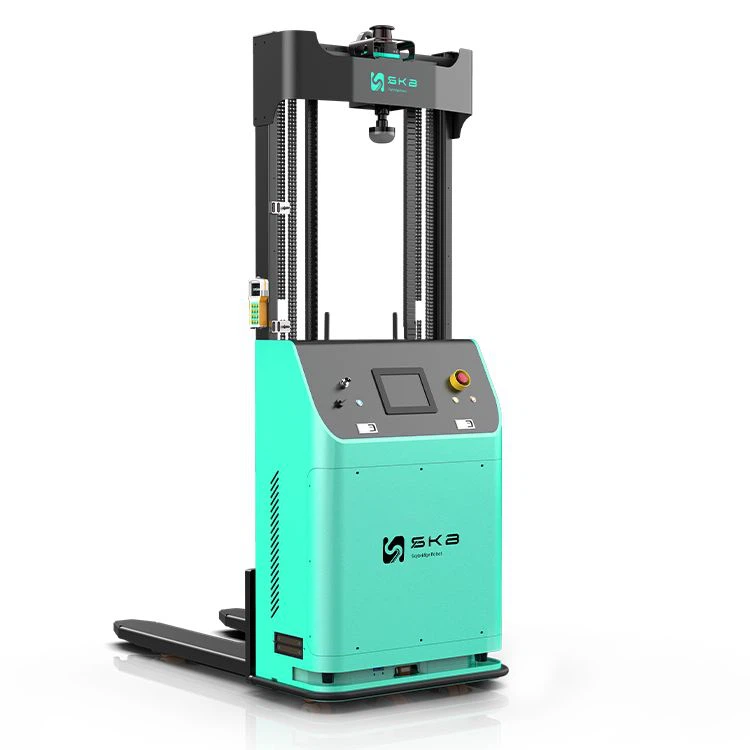
The WMS is the central control system for the warehouse and is responsible for managing the flow of goods and the operation of AGVs. AGVs receive task assignments from the WMS and report their status back to the WMS. The WMS uses this information to optimize the operation of the warehouse and ensure that tasks are completed efficiently.
Conveyor systems are used to transport goods between different areas of the warehouse. Forklift AGVs need to be able to interface with conveyor systems to load and unload goods. This requires the AGV to be equipped with the appropriate sensors and control systems to communicate with the conveyor system.
Storage systems, such as automated storage and retrieval systems (AS/RS), are used to store and retrieve goods in the warehouse. Forklift AGVs need to be able to work with AS/RS to transfer goods between the storage system and other areas of the warehouse. This requires the AGV to be able to interface with the AS/RS control system and follow the instructions provided by the system.
Challenges and Solutions in AGV Synchronization
Despite the many benefits of AGV synchronization, there are several challenges that need to be addressed. One of the main challenges is the complexity of the warehouse environment. Warehouses are dynamic environments with changing layouts, traffic patterns, and inventory levels. AGVs need to be able to adapt to these changes and continue to operate efficiently.
Another challenge is the scalability of the AGV system. As the warehouse grows and the number of AGVs increases, it becomes more difficult to manage and synchronize the operation of the AGVs. This requires the use of advanced algorithms and control systems to ensure that the AGV system can scale up without compromising performance.
To address these challenges, we offer a range of solutions. Our Automated Guided Forklift AGV systems are designed to be flexible and adaptable, allowing them to operate in a variety of warehouse environments. We use advanced algorithms and control systems to optimize the operation of the AGVs and ensure that they can work together seamlessly.
Best Practices for AGV Synchronization
To achieve efficient AGV synchronization, it is important to follow some best practices. These include:
- Proper Planning and Design: Before implementing an AGV system, it is important to conduct a thorough analysis of the warehouse layout, traffic patterns, and inventory levels. This will help to determine the optimal number and type of AGVs, as well as the best navigation and communication technologies.
- Regular Maintenance and Upgrades: AGVs are complex machines that require regular maintenance and upgrades to ensure optimal performance. This includes checking the sensors, batteries, and control systems, as well as updating the software and firmware.
- Training and Education: Operators and maintenance personnel need to be trained on the operation and maintenance of the AGV system. This will help to ensure that the AGVs are used correctly and that any issues are addressed promptly.
- Continuous Monitoring and Optimization: The performance of the AGV system should be continuously monitored and optimized. This includes analyzing the data collected by the AGVs and the WMS to identify areas for improvement and make adjustments to the system as needed.
Conclusion
In conclusion, the synchronization of Forklift AGVs with other AGVs in the warehouse is a complex but essential process. By understanding the basics of AGV synchronization, using effective communication protocols, implementing proper task allocation and scheduling, ensuring collision avoidance, integrating with other warehouse systems, and following best practices, we can achieve efficient and reliable AGV operation.
As a leading Forklift AGV supplier, we are committed to providing our customers with the highest quality AGV systems and solutions. Our Stacking Forklift AGV are designed to meet the specific needs of your warehouse and can help you to optimize your operations, increase productivity, and reduce costs.
If you are interested in learning more about our Forklift AGV systems or would like to discuss your specific requirements, please do not hesitate to contact us. We look forward to the opportunity to work with you and help you to achieve your warehouse automation goals.
References
- Tanchoco, J. M. A., & Kuo, Y. -H. (1990). Automated guided vehicle systems: A literature survey. International Journal of Production Research, 28(5), 923 - 958.
- Vis, I. F. A., & Roodbergen, K. J. (2009). Design and control of automated guided vehicle systems: A literature review. European Journal of Operational Research, 198(3), 667 - 677.
- de Koster, R. (2007). Warehouse design and control: Framework and literature review. European Journal of Operational Research, 182(2), 481 - 501.