

Can a forklift AGV work in a cold storage environment?
Can a forklift AGV work in a cold storage environment? This is a question that many warehouse managers and logistics professionals often ask. As a supplier of Handling Forklift AGVs, I have had the opportunity to work with a variety of clients in different industries, including those operating in cold storage facilities. In this blog post, I will share my insights on whether a forklift AGV can effectively operate in a cold storage environment.
Understanding the Challenges of Cold Storage Environments
Cold storage environments present unique challenges for any equipment, including forklift AGVs. The most obvious challenge is the low temperature. Temperatures in cold storage facilities can range from -20°C to -30°C, which can have a significant impact on the performance and reliability of the AGV.
One of the primary concerns is the effect of cold on the battery. Most forklift AGVs use lithium-ion batteries, which are sensitive to low temperatures. At low temperatures, the chemical reactions within the battery slow down, reducing its capacity and performance. This can lead to shorter operating times and longer charging periods, which can affect the overall efficiency of the AGV.
Another challenge is the impact of cold on the mechanical components of the AGV. Cold temperatures can cause the lubricants in the AGV's moving parts to thicken, increasing friction and wear. This can lead to premature failure of the components and increased maintenance costs.
In addition to the low temperature, cold storage environments are often humid, which can cause corrosion and rust on the AGV's metal parts. This can also affect the performance and reliability of the AGV.
Adaptations for Cold Storage Operation
Despite these challenges, it is possible for a forklift AGV to work effectively in a cold storage environment with the right adaptations.
Battery Management
To address the issue of battery performance in cold temperatures, some AGV manufacturers offer batteries specifically designed for cold storage applications. These batteries are engineered to maintain their performance at low temperatures, providing longer operating times and faster charging.
In addition to using specialized batteries, proper battery management is also crucial. This includes keeping the batteries warm during charging and storage, as well as monitoring the battery's state of charge and temperature.
Lubrication and Maintenance
To prevent the thickening of lubricants in cold temperatures, AGV manufacturers use special lubricants that are designed to remain fluid at low temperatures. Regular maintenance is also essential to ensure that the AGV's mechanical components are properly lubricated and functioning correctly.
Corrosion Protection
To protect the AGV's metal parts from corrosion and rust, manufacturers use corrosion-resistant materials and coatings. Regular cleaning and inspection of the AGV are also important to prevent the buildup of moisture and debris.
Types of Forklift AGVs Suitable for Cold Storage
There are several types of forklift AGVs that are suitable for cold storage environments.

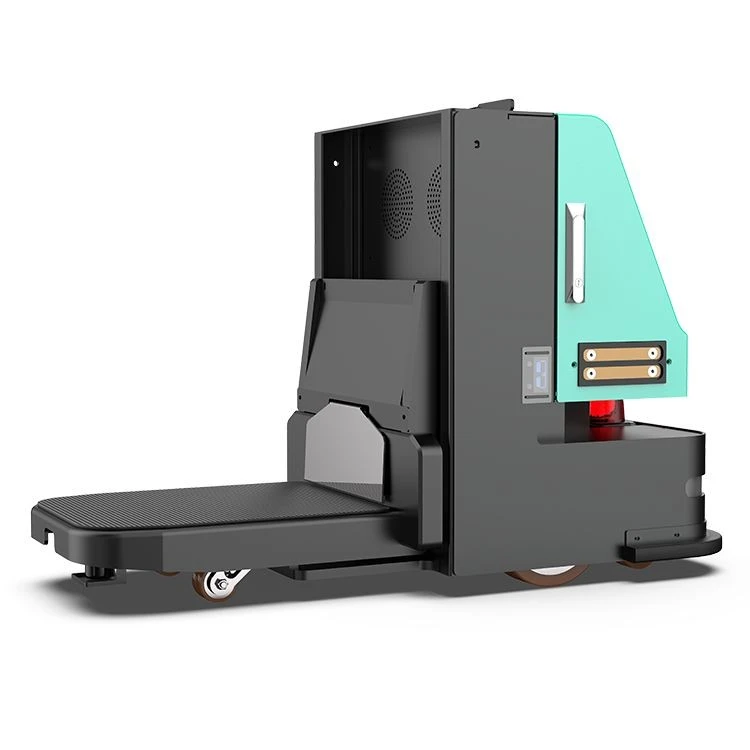
Laser Guided Forklift AGV
A Laser Guided Forklift AGV uses laser technology to navigate through the warehouse. This type of AGV is highly accurate and can operate in narrow aisles, making it ideal for cold storage facilities where space is limited.
Forklift AGV for Pallets
A Forklift AGV for Pallets is designed to handle pallets in a cold storage environment. These AGVs are equipped with specialized forks and lifting mechanisms to safely and efficiently move pallets in and out of storage.
Stacking Forklift AGV
A Stacking Forklift AGV is capable of stacking pallets in multiple levels, maximizing the use of vertical space in a cold storage facility. This type of AGV is ideal for high-density storage applications.
Benefits of Using Forklift AGVs in Cold Storage
Using forklift AGVs in a cold storage environment offers several benefits.
Increased Efficiency
Forklift AGVs can operate 24/7 without breaks, which can significantly increase the efficiency of the cold storage operation. They can also perform tasks more quickly and accurately than human operators, reducing the time and effort required to move goods in and out of storage.
Improved Safety
Cold storage environments can be dangerous for human operators, especially in low temperatures and high humidity. Forklift AGVs eliminate the need for human operators to work in these conditions, reducing the risk of accidents and injuries.
Cost Savings
While the initial investment in forklift AGVs may be higher than traditional forklifts, the long-term cost savings can be significant. AGVs require less maintenance and labor, and they can operate more efficiently, reducing energy consumption and overall operating costs.
Conclusion
In conclusion, a forklift AGV can work effectively in a cold storage environment with the right adaptations. By using specialized batteries, lubricants, and corrosion protection, AGVs can overcome the challenges posed by low temperatures and high humidity. The types of forklift AGVs, such as Laser Guided Forklift AGVs, Forklift AGVs for Pallets, and Stacking Forklift AGVs, offer different capabilities to meet the specific needs of cold storage facilities. The benefits of using forklift AGVs in cold storage, including increased efficiency, improved safety, and cost savings, make them a viable option for many businesses.
If you are considering implementing forklift AGVs in your cold storage facility, I encourage you to contact us to discuss your specific requirements. Our team of experts can help you select the right AGV solution for your needs and provide you with the support and service you need to ensure a successful implementation.
References
- "Cold Storage Warehouse Automation: A Guide to AGVs and AMRs." Logistics Management, 2023.
- "Forklift AGV Technology for Cold Storage Applications." Material Handling & Logistics, 2022.
- "The Impact of Cold Temperatures on Forklift AGV Performance." Industrial Engineering Journal, 2021.